
The History of Halloween
Origins of the Celtic Harvest Festival
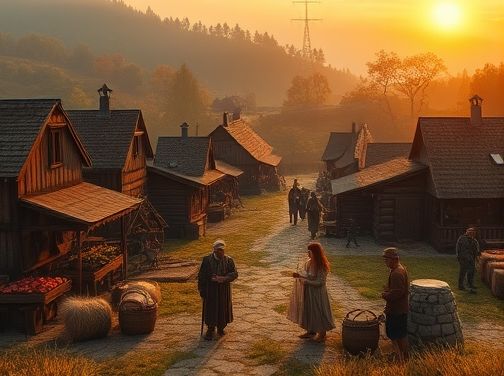
Before the glow of jack‑o‑lanterns and the thrum of modern pop culture, the roots of what we now call Halloween lie deep in the ancient agricultural societies of the British Isles. The original Celtic harvest festival—known to the Druids as Samhain (pronounced “sow-in”)—was a time of reverence, fear, and communal celebration that shaped the rituals and symbolism still evident in contemporary celebrations.
The Calendar of the Celts
To understand Samhain, one must first consider the Celtic worldview. Their calendar was structured around the cycles of nature: the spring planting season, the summer harvest, the autumnal fallow period, and finally the winter dark. Samhain marked the end of the harvest year and the onset of winter’s cold darkness. It fell on the night that transitioned from October 31 to November 1, a date that coincided with the astronomical event when the sun began its slow descent toward the northern hemisphere’s lower latitudes.
Why the Harvest?
The harvest was a critical period for survival. Crops had been tended and gathered; livestock were brought inside. The community's collective labor culminated in abundance, but also presented vulnerabilities—crops could spoil, animals could escape, and the soil’s fertility seemed to wane with the approaching darkness.
Divine Protection and Rituals
The Druids believed that during Samhain, the veil between the living world and the realm of the dead thinned. This belief led to a series of protective rituals:
- Burning of Sacred Fires: Large bonfires were lit on hilltops and in village centers. These fires served both practical purposes—keeping animals safe from wolves—and symbolic ones, representing the sun’s waning light.
- Feasting and Offerings: Families shared communal meals that included the first of the new season’s bread and barley wine. Offerings were left at altars to appease deities like Brigid, goddess of hearth and fire.
- Clothing and Masks: People wore animal skins or decorated their faces with leaves and herbs to disguise themselves from wandering spirits, reflecting a mutual respect between the living and those who had passed on.
The Spiritual Significance of Samhain
Samhain was not merely a harvest festival; it was also an inauguration of a new year for the Celts. The Celtic New Year began with the first sunrise after the longest night of the year, symbolizing rebirth and renewal. This dual nature—ending one cycle while beginning another—provided a powerful metaphor that would echo through centuries.
Folklore and the Afterlife
Stories circulated about how the dead returned to visit their kin during Samhain. These narratives were cautionary tales urging people to keep fire burning in homes, to lock doors, and to perform rituals that ensured safe passage for both the living and the spirits.
Legacy into Modern Halloween
The customs of Samhain evolved through Roman occupation, Christianization, and migration. The Catholic Church designated November 1 as All Saints’ Day, later shifting it to All Souls’ Day on November 2. The original Celtic practices—lighting fires, feasting, and honoring the dead—merged with these new observances, giving rise to a hybrid festival that celebrated life’s cyclical nature.
Even today, many of Halloween’s traditions trace directly back to Samhain: bonfires that light up night skies, carved pumpkins (a later adaptation of turnips), costumes designed to ward off spirits, and the communal sharing of food all echo the ancient Celtic harvest festival. By tracing these roots, we see how a once‑mysterious celebration of nature’s rhythms has become an enduring cultural phenomenon.
The History of Halloween
The Roman Influence and the Birth of All Souls' Eve
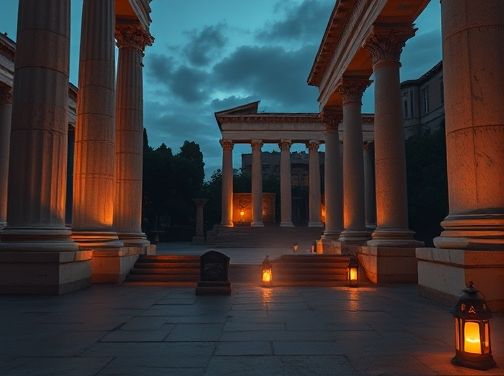
When we trace the roots of what is now celebrated as Halloween, it becomes clear that the festival is a palimpsest of cultural layers. The most significant early layer is the ancient Roman influence, which laid the groundwork for the modern All Souls’ Eve by introducing ideas about honoring the dead and commemorating them through public rituals.
Romans had long held the belief that the boundary between life and death was porous during certain times of the year. In particular, they observed a period in late September and early October when the veil between worlds was thought to be thinnest. This season coincided with the harvest festivals of Abundantia (the goddess of abundance) and the Roman festival of All Souls’ Day, which later evolved into the Christian All Saints' Day.
The Roman festival of All Souls’ Eve was known as “Aulae Noctis” in Latin, meaning “night of the halls.” During this time, Romans would decorate their homes with wreaths and flowers made from autumnal produce. They also prepared special offerings of food to invite spirits of the deceased to visit the living.
In addition to home-based rituals, the Romans organized public celebrations that included processions and communal feasts. These gatherings allowed families to come together and remember their ancestors in a collective setting. The public aspect was vital because it reinforced social cohesion—an essential function in Roman society, where loyalty to family and community were key values.
Roman customs also introduced the idea of “masque” or disguise during these festivals. People would wear masks made from painted wood or clay to conceal their identities. The masks symbolized a kind of transformation that allowed participants to temporarily step into another world—one where the living could interact with spirits in a safe, controlled environment.
When Christianity spread across the Roman Empire, many pagan practices were reinterpreted or absorbed into Christian traditions. The Church recognized the importance of remembering the dead and instituted its own observances, such as All Souls’ Day on November 2nd. Over time, the Roman rituals of “Aulae Noctis” merged with Christian commemoration, forming what we now call All Souls' Eve.
The blending of these traditions gave rise to a unique cultural artifact—a festival that simultaneously honored ancestors, celebrated harvest bounty, and promoted communal solidarity. The Romans’ emphasis on public remembrance laid the foundation for modern Halloween activities such as parades, community potlucks, and the symbolic “trick-or-treat” tradition that encourages neighborhood interaction.
Today, Halloween’s popularity extends beyond its Roman roots to encompass a wide array of customs from Celtic harvest rites, medieval Christian observances, and contemporary secular celebrations. Yet, at its core, the festival still reflects the ancient Roman belief in honoring the dead through communal rituals—an enduring legacy that has shaped how we celebrate All Souls’ Eve each year.
The History of Halloween
Medieval England’s Superstitions and Trick‑or‑Treat Traditions
A Cultural Tapestry Woven with Fear and Festivity
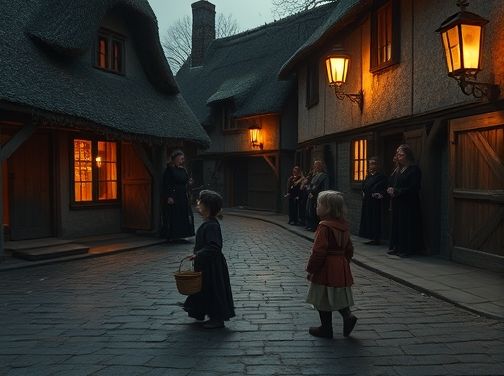
In medieval England, the transition from the harvest season to the chill of winter brought more than just changing weather; it ushered in a complex web of beliefs that would later shape Halloween as we know it today. These customs combined practical concerns—such as protecting crops and livestock—with deeply ingrained superstitions about the dead, the Devil, and the thin veil between worlds.
1. The Feast of All Hallows’ Eve
- Origins in Pagan Rituals: The celebration began on the night before All Saints’ Day (November 1), a time when Christians believed the souls of saints were welcomed into heaven. In England, this eve was also called All Hallows’ Eve, and people lit candles to guide spirits.
- Candlelight Processions: Villagers would carry lanterns made from hollowed-out turnips or small oil lamps, walking from house to house. The flickering light served both as a protective ward against wandering souls and as a beacon for the living to remember their deceased relatives.
2. Superstitions That Guided Daily Life
- The “Samhain” Connection: While the term Samhain is Celtic, English folk borrowed its concept of a night when the living and dead mingled. People believed that on this night, witches could easily cross between worlds.
- The Devil’s Footsteps: A common belief was that if one heard footsteps at midnight but no human could be found, it might be the Devil himself. To ward off such visits, households would leave a small offering—often a piece of bread or a boiled egg—outside their door.
- Protective Amulets: Farmers hung herbs like rosemary and bay leaves around barns to keep away malevolent spirits that could harm livestock during the winter months.
3. The Birth of Trick‑or‑Treating (Penny for a Prayer)
- Pennies for Good Luck: Children began going from door to door, offering prayers for the household’s safety in exchange for a penny or small treat. This was known as “penny for a prayer” and served dual purposes: it helped families raise funds for their parish and reinforced community bonds.
- The Role of the Church: Many churches organized special services on All Hallows’ Eve, where clergy would bless the households that participated in the penny‑collecting. The treats were often simple—candied apples or dried fruits—that symbolized the sweetness of faith amid the hardships of winter.
- From Piety to Play: Over time, the solemnity of these exchanges softened into a more playful tradition. Children began to wear costumes—sometimes as saints, sometimes as grotesque figures—to disguise themselves from evil spirits and to make the ritual more entertaining.
4. Cultural Legacy and Transformation
The medieval customs described above laid the groundwork for modern Halloween festivities in England and beyond. The practice of lighting lanterns evolved into trick‑or‑treating, while superstitions about spirits and protection remain embedded in contemporary folklore. Even today, many families light candles on November 1 to honor their ancestors—a nod to those medieval villagers who walked with flickering turnip lamps under a moonlit sky.
Conclusion
Medieval England’s superstitions and trick‑or‑treat traditions were more than quaint folklore; they were survival mechanisms, spiritual practices, and community rituals that bridged the gap between fear and celebration. Understanding these roots gives modern Halloween enthusiasts a richer appreciation for why we light candles, offer treats, and gather in costumes on All Hallows’ Eve.
The History of Halloween
Industrial Revolution: Halloween Goes Mainstream
From Folk Traditions to Factory Floors
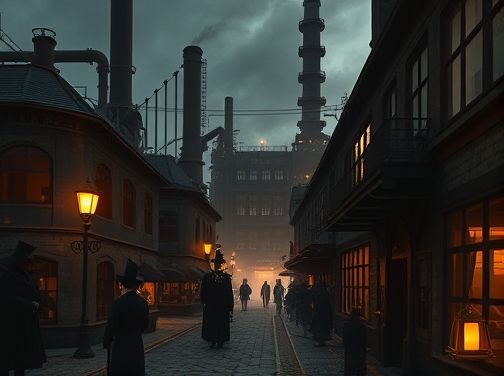
The Industrial Revolution, spanning roughly from the late 18th to early 19th centuries, transformed societies across Europe and North America. As factories sprouted in urban centers, daily life became regulated by machinery and assembly lines rather than agrarian rhythms. This shift had profound effects on cultural practices, including the way communities celebrated holidays.
Urbanization and the Rise of Mass Consumption
The migration from rural villages to burgeoning cities created dense populations that needed new forms of entertainment and community bonding. In this environment, Halloween—once a largely regional, agrarian festival—began to spread beyond its traditional borders. The growing urban middle class sought affordable ways to display their civic identity and social status.
Commercialization: From Hand‑Crafted Costumes to Factory Production
Before the industrial age, costumes were handmade from thrifted fabrics or sewn by family members. With mass production techniques, textile mills could produce inexpensive garments in bulk. This made elaborate outfits accessible to a wider audience and encouraged more creative expressions of identity during All Hallows’ Eve.
- Textile Mills: Leveraging steam power, mills produced cotton, wool, and later synthetic fibers that were both durable and cheap.
- Print Shops: The advent of lithography allowed for the widespread distribution of Halloween-themed posters and flyers, spreading ideas about costumes, decorations, and traditions across cities.
- Paper Goods: Factories could produce paper pumpkins, masks, and other props on a scale never before possible.
The Role of Transportation Networks
The expansion of railways and road infrastructure facilitated the movement of goods—and ideas—across regions. Halloween customs that originated in one city could quickly reach neighboring towns, leading to a more homogenized celebration across industrial centers.
Media Influence: Newspapers and Magazines
Print media began to feature articles on “All Hallows’ Eve” traditions, offering readers tips for costume design, recipes for seasonal treats, and safety advice for trick‑or‑treating. These publications not only informed but also shaped the way people perceived Halloween, turning it into a mainstream cultural event.
Workplace Traditions and Community Building
Factories often organized communal celebrations to boost morale. Halloween parties became an opportunity for workers to break from routine, fostering camaraderie through shared costumes and themed treats. These gatherings also helped spread the holiday’s customs among employees’ families, reinforcing its presence in everyday life.
The Legacy of Industrialization on Modern Halloween
Today’s Halloween—characterized by mass-produced costumes, candy, and elaborate decorations—has deep roots in the industrial changes that began two centuries ago. The standardization of goods, the creation of a consumer culture, and the integration of media all contributed to transforming a once-local festival into a global phenomenon.
Understanding this history reminds us how technological progress can reshape cultural practices, turning humble traditions into shared experiences celebrated by millions worldwide.
The History of Halloween
Modern Global Celebrations: From Costumes to Commercialization
A Worldwide Spectacle
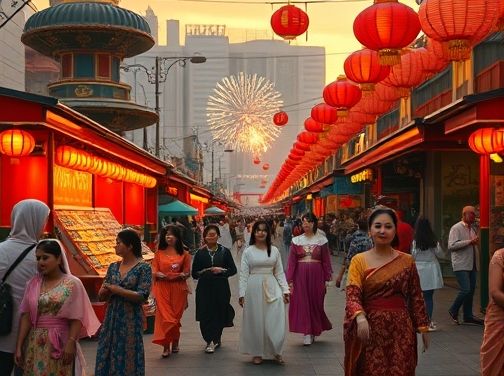
What began as a Celtic harvest festival has evolved into one of the most celebrated holidays worldwide. Today, people in North America, Europe, Latin America, and even parts of Asia participate in Halloween festivities with enthusiasm that rivals Christmas.
The Evolution of Costumes
- Early Traditions: The first costumes were simple garments made from animal skins and woven fabrics. Ancient Druids believed that wearing masks would help them blend into the spirits that roamed the earth during Samhain.
- Colonial Influence: In the 19th century, Irish immigrants in America introduced “trick-or-treat” to a new audience. Costumes became a way for children to engage with their community while adults appreciated the cultural diversity.
- Modern Variety: Contemporary Halloween costumes range from classic monsters—vampires, witches, ghosts—to pop‑culture icons like superheroes and meme characters. This reflects the influence of media, film, and video games on consumer preferences.
The Rise of Commercialization
Commercial interests have turned Halloween into a multi-billion dollar industry. The process can be traced through several key stages:
- Product Expansion: From candy corn to elaborate themed décor, manufacturers create seasonal items that cater to every age group.
- Advertising Campaigns: Major brands launch targeted marketing blitzes during October. These campaigns often tie in with blockbuster movies, encouraging consumers to buy themed merchandise.
- Retail Strategy: Stores redesign their layouts for the season—bright orange signage, spooky displays—to create an immersive shopping experience that boosts impulse purchases.
Cultural Adaptations Around the World
- Mexico – Día de los Muertos: While not Halloween per se, this festival shares similar themes of honoring the dead. Costumes here are elaborate sugar skulls and marigold decorations rather than pumpkins.
- Japan – Ghost Festival: Japanese communities host lantern processions, but the holiday has also embraced Western costumes for children’s parties.
- South Africa – Bonfire Night: A blend of European traditions with local folklore, where costumed revelers gather around bonfires to ward off evil spirits.
The Balance Between Tradition and Trend
As Halloween continues to grow, there is a growing conversation about preserving its cultural roots while embracing contemporary expressions. Many communities now host “heritage nights” that emphasize historical storytelling alongside modern entertainment. These initiatives remind us that the holiday’s essence—community, celebration, and reflection on mortality—remains unchanged even as costumes and commerce evolve.
In conclusion, Halloween today is a vibrant tapestry woven from ancient customs, evolving fashion, and commercial innovation. Its global reach showcases how traditions can adapt while retaining their core meaning, ensuring that the holiday remains relevant for generations to come.